
Concrete ScanningBendigo
Find out what is inside the slab before the blade does. Rebar, tendons, conduit and voids to 300mm deep.
- 24/7Every day, all year
- 20+ yrsCommercial / Civil
- CSDAAMember and insured
- 4.9 starsFrom 18 reviews
The cheapest part of the job, by a long way
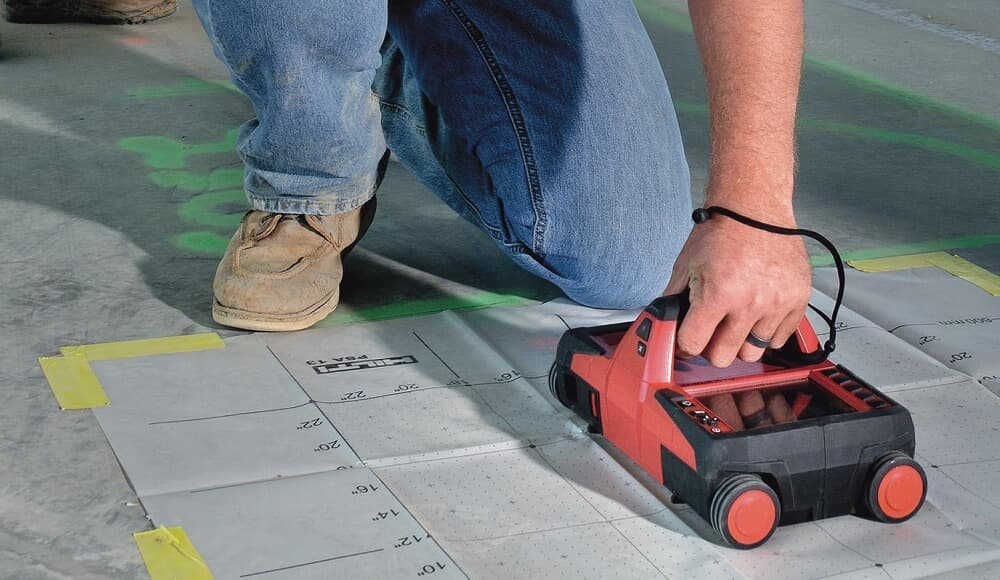
A Hilti PS-1000 sends radar into the slab and maps what is in there: reinforcing bar, post tension tendons, metal and plastic conduit, live cables, water pipe and voids, down to 300mm. We mark it on the surface, so the cut or the core gets set out around the things you cannot afford to hit.
The maths on this is not complicated. Scanning a slab costs a fraction of a day rate. Cutting a post tension tendon can mean structural remediation and an engineer. Cutting a live cable means an electrician, a shutdown and an incident report. Cutting a water main in a finished building means everything below it gets wet.
It also finds what is not there. Voids under a slab, missing reinforcement and thinner sections than the drawings claim all show up, which changes how a job gets priced and sequenced before anybody has committed to it.
What turns up
- Equipment
- Hilti PS-1000
- Depth
- To 300mm
- Finds
- Rebar and tendons
- Also finds
- Conduit and voids
- Output
- Marked on the slab
- Availability
- 24/7, 365
Scan before you commit
Any time the concrete is structural, occupied or full of services, and any time the drawings are older than the building.
Post tension slabs
Locating tendons before coring or cutting. Hitting one is the single most expensive mistake available on a concrete job.
Live services
Finding conduit, cabling and pipework cast into slabs and walls before a barrel or a blade finds it instead.
Structural slabs
Mapping reinforcement so an opening can be set out between the bars rather than through the middle of them.
Set out verification
Checking what is actually in the slab against what the drawings say, on buildings where the two parted ways years ago.
Void detection
Finding voids and honeycombing under a slab before a load goes on it or a core goes through it.
Thickness checks
Confirming slab depth before pricing a cut, so nobody discovers an extra hundred millimetres halfway through the job.
Concrete scanning in Bendigo before anybody cuts
Concrete scanning is the cheapest insurance available on a Bendigo site. A PS-1000 pass over a slab costs a fraction of a day rate, and it is the only thing standing between a set out and a post tension tendon, a live sub main or a charged water line.
Most of the work comes off commercial and civil jobs where the drawings and the building parted company decades ago. On an older Bendigo building the as built information is often wrong, occasionally missing, and never worth betting a structural slab on.
We will also scan for somebody else to cut. A lot of the work is a builder finding out whether an opening is even feasible before it goes into a program. Either way you get the marks on the slab and an honest read of what is in there.
Often on the same job
- Core Drilling Bendigo Scan and core in the same visit, one crew, one booking.
- Wall Sawing Bendigo Openings get set out between the bars rather than through them.
Concrete Scanning across the region
Bendigo is the base, but the truck is on the road most days. Same gear, same crew, same hours, right across central Victoria and southern New South Wales.
Bendigo
VICEaglehawk, Kangaroo Flat, Strathfieldsaye, Huntly, Epsom
Swan Hill
VICKerang, Cohuna, Robinvale, Nyah
Shepparton
VICMooroopna, Tatura, Numurkah, Nagambie
Seymour
VICNagambie, Broadford, Euroa, Kilmore, Heathcote, Puckapunyal
Deniliquin
NSWFinley, Barham, Tocumwal, Jerilderie, Hay
What Bendigo customers say
Asked often
Is concrete scanning the same as concrete X-ray?
People use the words interchangeably and this is what they mean. True X-ray needs access to both sides of the slab and a radiation exclusion zone. Ground penetrating radar like the PS-1000 works from one side, with nobody cleared off the floor.
How deep can you scan?
To 300mm. That covers the overwhelming majority of slabs, walls and footings we are asked to cut into.
What can it actually find?
Reinforcing bar, post tension tendons, metal and plastic conduit, live cabling, pipework and voids. We mark the lot on the surface so the set out can be adjusted before anyone cuts.
Do I need scanning on a house slab?
Not always. On a plain residential slab with no services in the area we will tell you it is not worth the money. On post tension, structural, commercial or occupied work, it is not really optional.
Can you scan without cutting?
Yes. Plenty of scanning work is for someone else to cut, or for a builder deciding whether a job is even feasible. We will scan, mark it up and leave you with what is in there.
What happens if the scan shows a problem?
We tell you before the blade goes in, not after. Usually the fix is shifting the set out a couple of hundred millimetres. Occasionally it means the opening needs an engineer to look at it, which is far better found on day one.
Do not guess what is in there
Tell us the slab, the building and what you are planning to cut. Scanning it first costs a fraction of finding out the hard way.